Selçuk, İzmir Province
Ephesus Beyond the Monument
Follow the streets towards a vanished harbour, then turn to the hillside houses for a more intimate view of the ancient city.
- Region
- The Aegean
- Also known as
- Efes, Ephesos
- Position
- 37.94° N 27.34° E
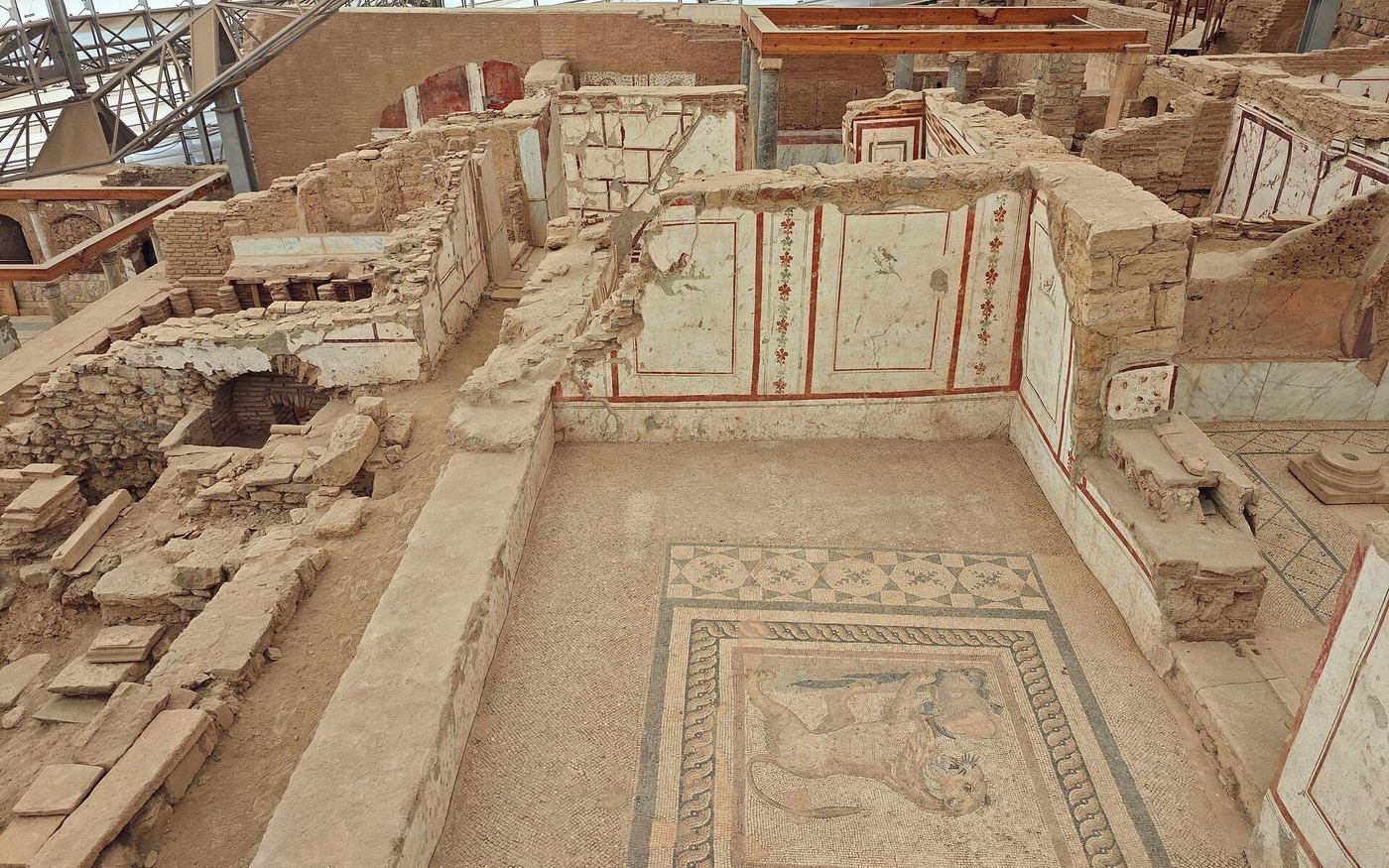
Ephesus’s successive settlements followed a changing coastline, leaving an ancient port-city landscape inland today. Its streets and public monuments show the city at civic scale; the Terrace Houses preserve evidence of affluent domestic interiors and decoration. Reading these parts together connects urban history with individual spaces. The houses represent elite households, with a different perspective from the monumental centre.
At the end of a monumental street, open ground can be as revealing as a standing building. Ephesus asks the visitor to imagine a coastline that no longer reaches the city and to understand how that change shaped its history.
The walk also moves between public display and domestic interiors. A façade addresses the street; the rooms uphill preserve other choices about decoration and daily space. Together they make the site intelligible as a city.
A city shaped by a moving coast
UNESCO describes a sequence of settlements that followed the coastline as it retreated westwards. That is the key geographical fact behind this visit. What looks like an inland archaeological plain was once part of a port’s relationship with the sea. Look at the position of the streets and the space beyond the monuments with that changing relationship in mind.
Site interpretation supplies the chronology of individual areas. Follow those sequences alongside the broad geographical account to see how different parts developed.
Public city and domestic scale
The main monuments offer a powerful public image. The Terrace Houses change the scale. Their rooms ask about enclosure, display and movement within a wealthy household. The Austrian Archaeological Institute’s account of Terrace House 2 identifies seven houses and emphasises surviving frescoes as well as the continuing work of conservation.
These are elite households, preserving only part of the population’s experience. Their decoration raises a useful question about whose lives remain visible in the archaeological record. Our Terrace Houses essay explores the rooms and their surviving surfaces.
Let fragments remain fragments
UNESCO includes the Artemis sanctuary within its explanation of the wider Ephesus landscape. The limited remains offer a different experience from a re-erected architectural front. Each asks for a different kind of explanation. Look for interpretation that distinguishes survival, reconstruction and uncertainty.
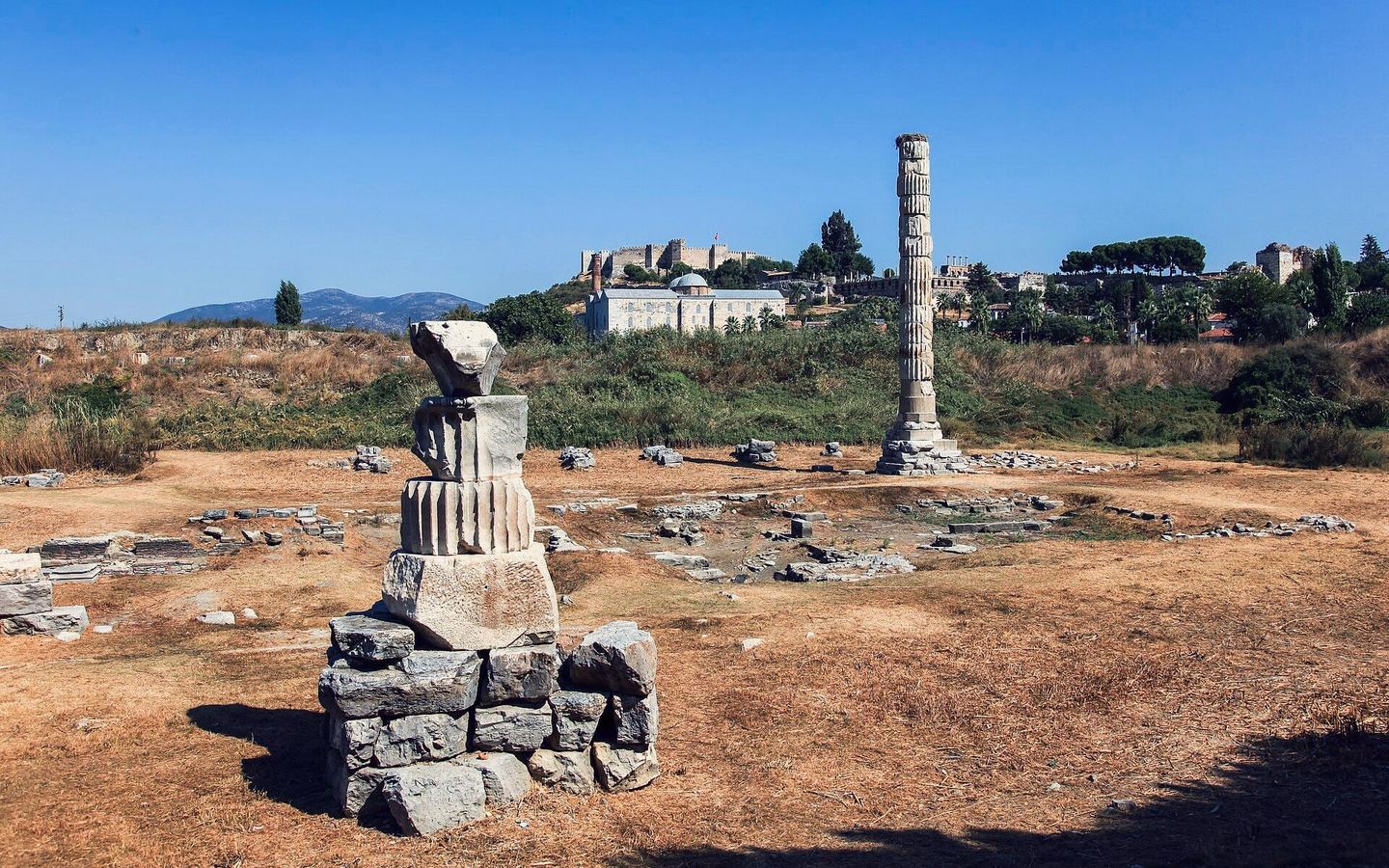
Surviving material, re-erection and historical interpretation all contribute to the visit. A good explanation makes those layers clear, showing which conclusions rest on the remains and where the evidence runs out.
Decide the depth before adding destinations
For a shorter visit, protect time in the main city and choose one subject to follow closely. Domestic architecture and painting may justify the Terrace Houses; a first archaeological visit may need more time simply to understand the streets and monuments. Confirm current admission and the permitted physical route before deciding.
For a full day, the surrounding Selçuk landscape offers a continuation. Şirince is a separate change of pace, not an automatic add-on. A cruise visitor must first protect the return to port; our shore guide explains the trade-off.
For entrances, ticket arrangements and monument-specific logistics, EphesusTour (opens in a new tab) has the focused role. A private visit may help align the site with a particular interest, while a small group may fit someone happy with a shared pace. Our comparison helps make that decision before moving to the operator’s current offer.
Close up
Details to look for.
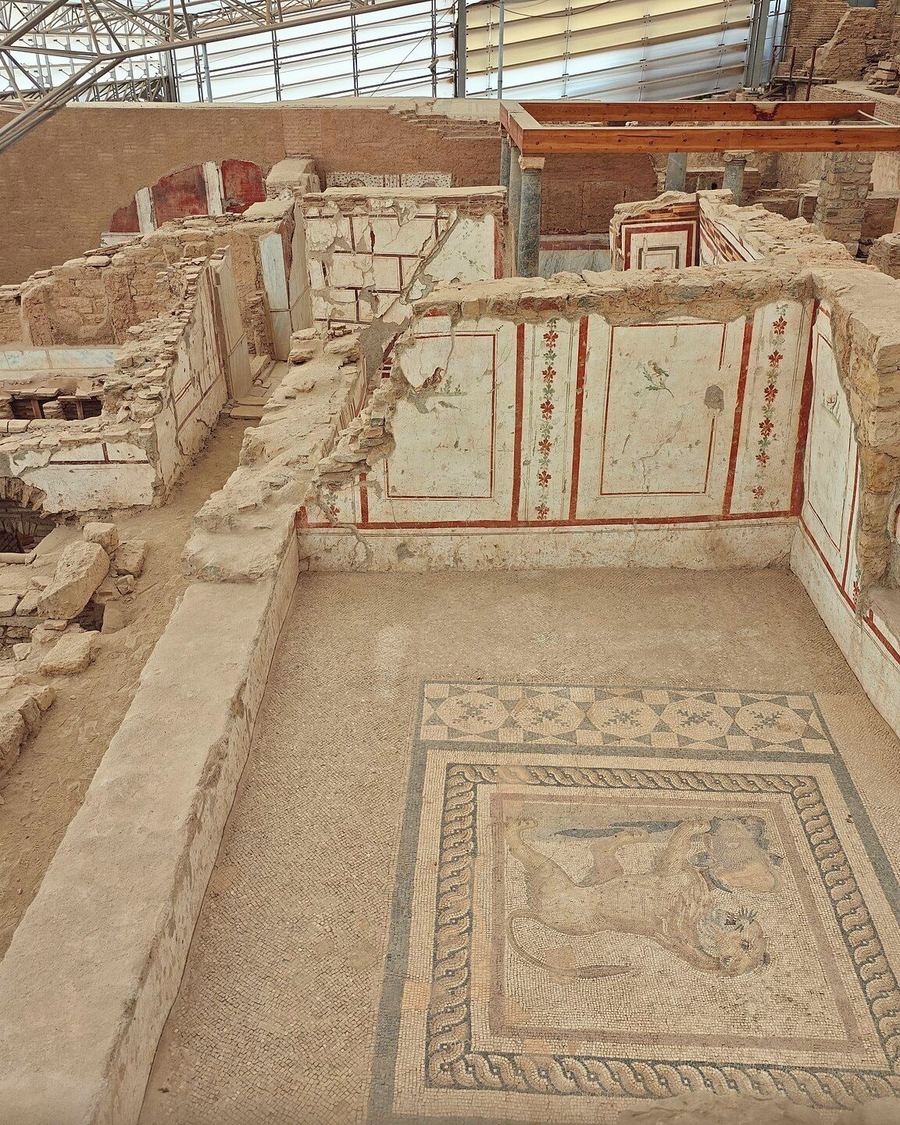
The Austrian Archaeological Institute describes Terrace House 2 as seven houses on three terraces. Their frescoes and decorated surfaces offer evidence of elite domestic life rather than a sample of how everyone in the city lived.
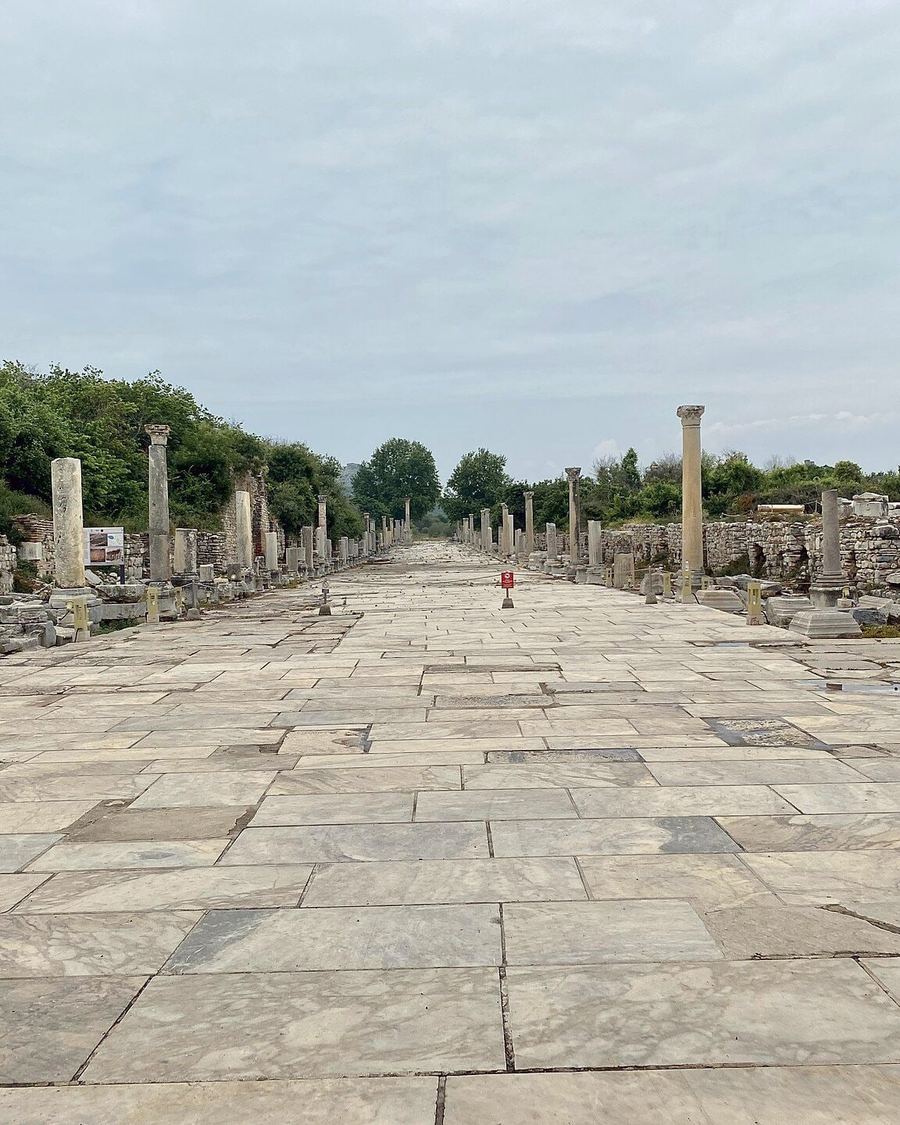
The Arcadian Way points towards the ancient harbour landscape. UNESCO’s account of the retreating coast makes that open ground part of the subject, rather than a backdrop to the standing remains.
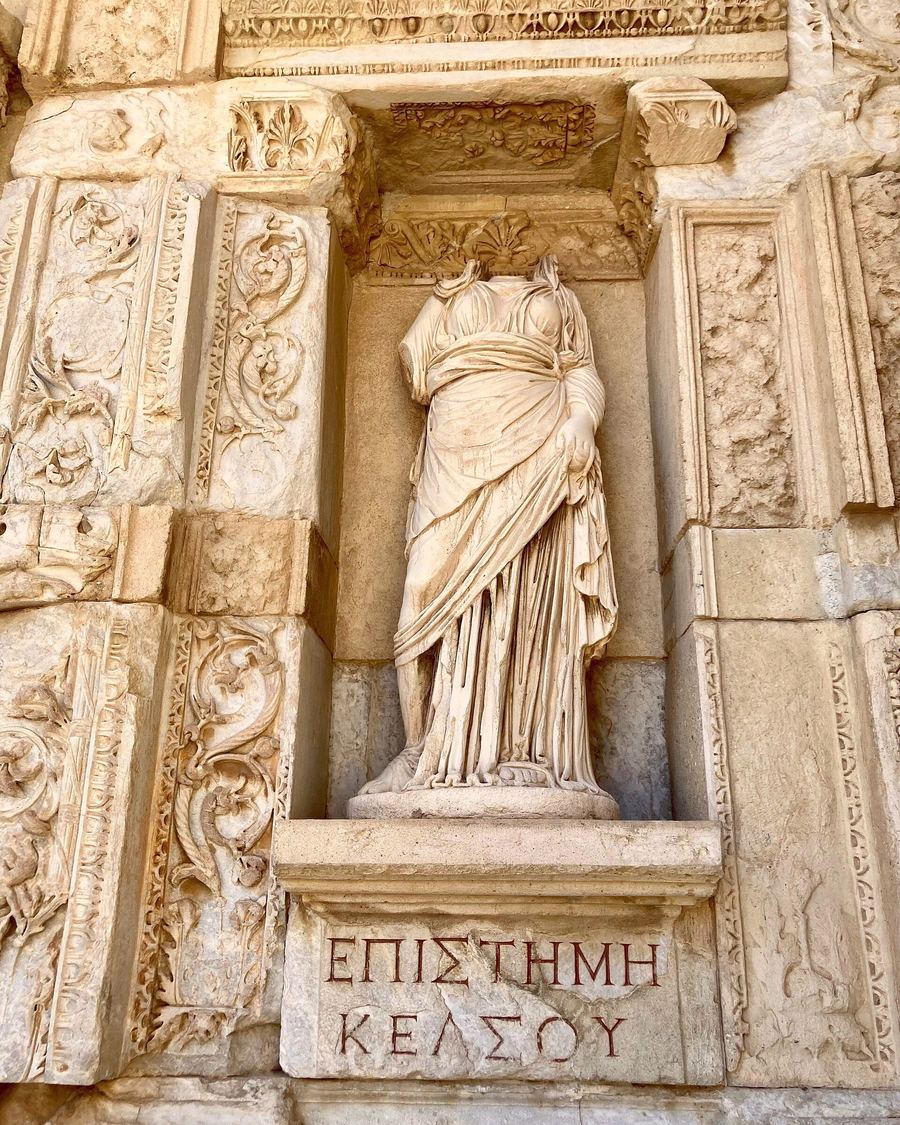
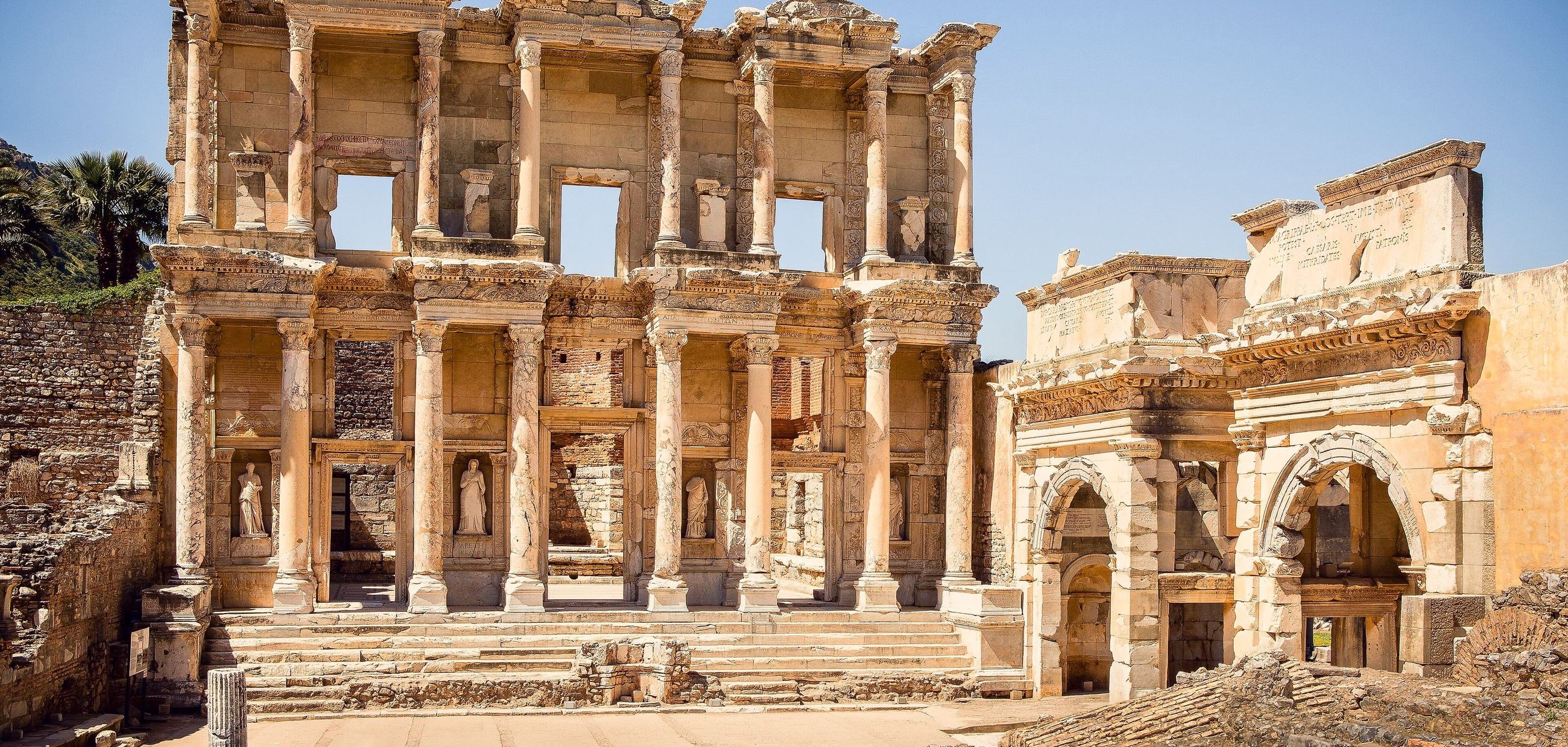
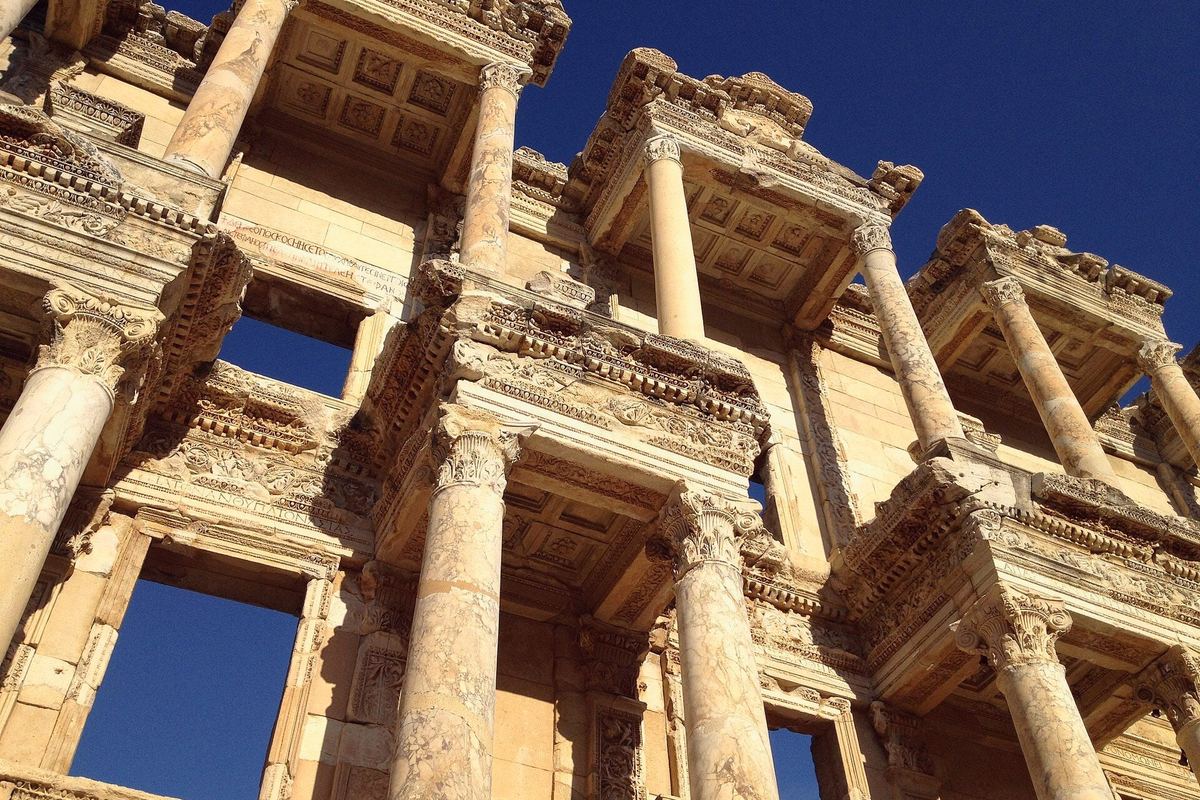
At the library façade, compare a single architectural detail with the way the whole front addresses the street. Public display and a building’s inner purpose are related questions, rather than the same one.
Getting there, and when
Plan from Selçuk or your actual regional base and confirm the current entrance route, admission and visiting restrictions. The archaeological route includes uneven surfaces and exposed areas; discuss a specific access plan if steps or sustained walking are difficult. Exact road and touring times belong to a current itinerary.
For practical, monument-by-monument logistics, including entrances and timing, see our sister guide, EphesusTour (opens in a new tab).
Keep reading