History
The Ephesus Terrace Houses: Life Behind the Monumental Streets
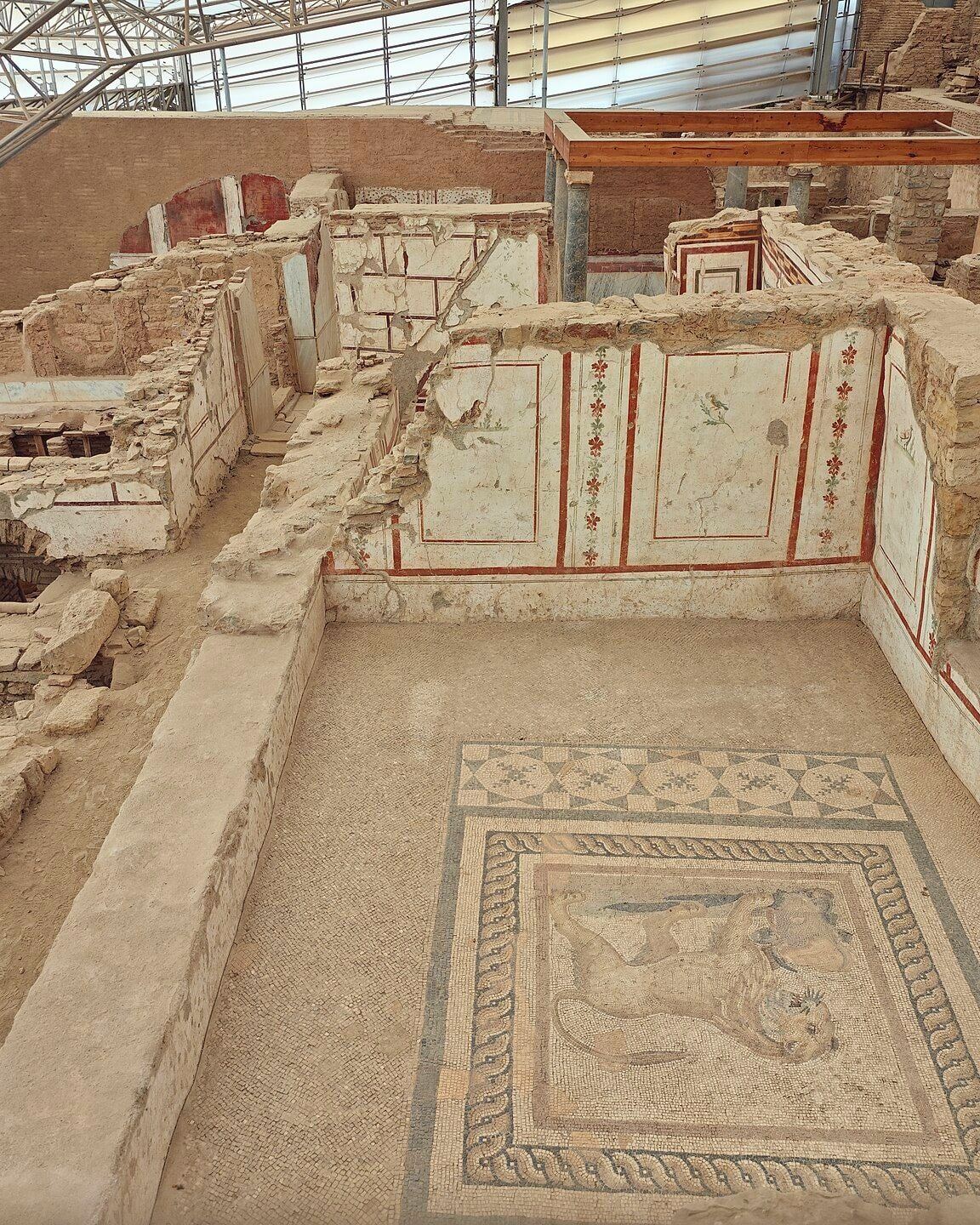
Painted walls and traces of repair bring wealthy Ephesian households into view. Their interiors reveal a city changing behind its public façades.
A painted wall draws attention differently from a monumental façade. Its decoration belongs to a room: a space someone entered, moved through and furnished. In the Terrace Houses, the architectural visit becomes a question about the use of an interior.
The most revealing surfaces also bear evidence of change. Repainting, graffiti and repairs complicate the idea of a Roman home preserved at a single moment.
The Terrace Houses are especially worthwhile for visitors interested in Roman domestic architecture, mosaics and wall painting. The Austrian Archaeological Institute describes Terrace House 2 as seven housing units on three terraces. These were affluent households, not a representative sample of all Ephesian homes. On a short visit, weigh the additional interior against the time needed for the main archaeological site.
Rooms arranged for living and display
A doorway establishes a route through a house; a decorated surface can draw the eye towards one part of a room. Considering these features together helps explain how an interior worked. The houses’ elaborate decoration also makes wealth visible at a domestic scale, complementing the civic display of the streets outside.
These remains support questions about movement, privacy and presentation. Reconstructing a precise household routine requires further evidence. The useful distinction is between what the room preserves and what its arrangement suggests.
The marks on the wall
The Austrian Archaeological Institute’s conservation account discusses repeated repainting, graffiti and damage. A surface may hold several phases of decoration and use. Its interest lies partly in that sequence: an earlier image, a later intervention and the marks that remained after the building changed.
A protected interior and an exposed street also survive under different conditions. The shelter makes fragile painting available to visitors, while the surfaces beneath it still need continuing care. Conservation becomes part of the interpretation of the rooms.
Preservation without invented images
In its 2023 account, the Austrian team describes cleaning and stabilising surviving paintings without adding reconstructed images. This method lets the remaining material carry the evidence, including its gaps. An incomplete surface can therefore tell the visitor something that a fully repainted room would conceal.
Follow the marked route and check current admission and physical access, particularly if steps or raised walkways affect your visit. EphesusTour (opens in a new tab) provides the complementary practical focus on ticketing and access; the dated conservation account does not establish what work will be under way during a future visit.
When to include the houses
Allow them a substantial part of the day when painting, domestic architecture or social history is a leading interest. On a cruise call, the Kuşadası shore guide helps weigh that choice against the return deadline.
The houses also change how the monumental city is understood. Outside, wealth appears in public architecture; inside, it becomes a choice of rooms and decorated walls. Traces of repainting bring another dimension to both: the ancient city was continually being used, altered and maintained.
Follow on